
"early coffee planting"
7000 article(s) found

A brief introduction to the cultivation of pure and gentle Santo Domingo boutique coffee beans, geographical location, climate and altitude
To trace the origin of Tibica, we should first talk about the coffee trees originally planted in Martinique. These trees were planted by Dominicans as far back as the early 18th century, so Dominica began growing coffee as early as that time. For a time, the Caribbean was almost synonymous with coffee production, but in recent years Cuba, Haiti and other producing areas have been severely damaged by Hurricane George.

The History of Coffee introduction and expansion in China in the early stage (2)
1. The presentation of the respective expressions and questions of Zhu Kula Coffee 1.1 I remember that it was still the spring of 1995, when Professor Mao Genhai of the former South China Hot farming Academy and I visited Xishuangbanna, Yunnan Province. I had the honor to see the review and prospect of Yunnan coffee development published in the third issue of Tropical crop Science and Technology in 1994 by Huang Junxiong and Zhang Xingcan, Institute of Tropical and Subtropical Economic crops, Yunnan Academy of Agricultural Sciences

The quality of El Salvador Himalayan Coffee Flavor Manor Variety planting situation is simple
In the early 1990s, guerrilla warfare greatly damaged the country's national economy, reducing coffee production from 3.5 million bags in the early 1970s to 2.5 million bags in 1990-1991. The eastern part of the country was most affected by guerrilla warfare, and many farmers and workers were forced to leave the manor. The shortage of funds has led to a sharp drop in coffee production, from 1200 kg per hectare in the past to today's yield per hectare

Introduction to the treatment method of El Salvador Black Honey treatment Coffee Bean Price planting Environment Cooperative
Introduction to the cooperative treatment method of the price of coffee beans treated with black honey in El Salvador in the early 1990s, guerrilla warfare greatly damaged the country's national economy, reducing coffee production from 3.5 million bags in the early 1970s to 2.5 million bags in 1990 and 1991. The eastern part of the country was most affected by guerrilla warfare, and many farmers and workers were forced to leave the manor. The shortage of funds caused a sharp drop in coffee production.

Fresh and elegant Santo Domingo boutique coffee bean cultivation geographical location, climate, good altitude
Carefully selected in this way, the high-quality Dominican coffee exudes a faint aroma and gives people a faint fruity aroma with a lingering finish and a smooth and smooth finish. To trace the origin of Tibica, we should first talk about the coffee trees originally planted in Martinique. These trees were planted by Dominicans as far back as the early 18th century, so Dominica began at that time.
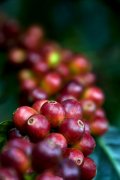
A Survey of Chinese Coffee Culture on the introduction of Coffee in Hainan Island in 1898
1.1 the age of the early introduction of coffee in Hainan Island is indisputably expressed as 1908 in many local records, agricultural history, agricultural history and various books and periodicals in China. However, the remains of the century-old coffee trees in Hainan Island are still there, and the descendants of the ancient trees are still there. Therefore, the actual existence of the century-old coffee trees unequivocally rewrote that the earliest introduction of coffee in Hainan Island should be in 1898. 1.2
History of Coffee planting in the early stage of Coffee introduction and expansion in China (2)
1. The presentation of the respective expressions and questions of Zhu Kula Coffee 1.1 I remember that it was still the spring of 1995, when Professor Mao Genhai of the former South China Hot farming Academy and I visited Xishuangbanna, Yunnan Province. I had the honor to see the review and prospect of Yunnan coffee development published in the third issue of Tropical crop Science and Technology in 1994 by Huang Junxiong and Zhang Xingcan, Institute of Tropical and Subtropical Economic crops, Yunnan Academy of Agricultural Sciences

A brief introduction to the flavor, taste and aroma characteristics of pure slightly sour Salvadoran coffee beans
In the early 1990s, guerrilla warfare greatly damaged the country's national economy, reducing coffee production from 3.5 million bags in the early 1970s to 2.5 million bags in 1990 and 1991. The eastern part of the country was most affected by guerrilla warfare, and many farmers and workers were forced to leave the manor. The shortage of funds has led to a sharp drop in coffee production, from 1200 kg per hectare in the past to less than 9 per hectare today.

Distribution of main producing areas of Dominican Coffee
Following Cafe (official account vdailycom of Wechat) found that Beautiful Cafe opened a small shop of its own to trace the origin of Tibika, starting with coffee trees originally planted in Martinique. These trees were planted by Dominicans as far back as the early 18th century, so Dominica began growing coffee as early as that time. For a time, the Caribbean was almost regarded as coffee production

Introduction to the flavor of Colombian coffee and the cultivation of Colombian coffee varieties
The early varieties planted in Colombia were the old iron pickup and bourbon, which were replaced by Kaddura in 1970; Kaddura is not only more productive per plant than iron pickup and bourbon, but also can be planted more per unit of acreage because the tree is more compact. In 1961, CENICAFE began to study the Timor variety of Robusta blood, and then selected Timor and Caturra.

Coffee Culture Coffee spread in Asia
How did the world-famous coffee spread to Asia? Looking at the spread of coffee culture in Asia, it is said that Europeans realized early on that there were high profits in producing and buying and selling coffee. Europeans began to try again and again to steal coffee seedlings as early as the 14th century. But helpless coffee cannot be grown in cold places, so the natural characteristics of coffee protect their producing countries. According to

Dominica Santo Domingo Coffee Flavor description Grinding Variety characteristics of Fine Coffee
The earliest coffee in Dominica was introduced from Martinique (the overseas province of France), dating back to the early 18th century. Dominica is an island country with a tropical climate. The temperature changes little throughout the year. Except for the lower temperature in the Central Cordillera Mountains, which can reach less than 0 ℃ in winter, the annual average temperature in other areas is between 25 and 30 ℃, which is affected by the mountain topography.

Description of coffee flavor characteristics of Salvadoran coffee planting and production areas of coffee
Salvadoran coffee refers to the coffee produced in the small South American country of El Salvador, where the coffee body is light, aromatic, pure, slightly sour, the flavor is extremely balanced, is a specialty of Central America. With sour, bitter, sweet and other taste characteristics, the best baking degree is moderate, deep. In the early 1990s, guerrilla warfare greatly damaged the country's national economy, increasing coffee production from the early 1970s.

A brief introduction to the planting of Coffee Flavor description varieties in Santa Rita Manor, Colombia
The main varieties of Colombian coffee are small grains of coffee. In 1864, Jubal A. Early led Confederate troops to occupy parts of Montgomery County for a short time and attack the District of Columbia. On July 11, Confederate troops attacked Rockville Pike (MD-355), New Cut Road (now Viers Mill Road MD-586) via Rockville and Wheaton.

Planting situation of Renas Manor Coffee Manor in El Salvador A brief introduction to the production of climate and altitude
In the early 1990s, guerrilla warfare greatly damaged the country's national economy, reducing coffee production from 3.5 million bags in the early 1970s to 2.5 million bags in 1990-1991. The eastern part of the country was most affected by guerrilla warfare, and many farmers and workers were forced to leave the manor. The shortage of funds has led to a sharp drop in coffee production, from 1200 kg per hectare in the past to today's yield per hectare

Pure and soft Dominica Santo Domingo Coffee Flavor description Variety Grinding method
In the early 18th century, coffee was introduced to Domiga from Martinique, and fine coffee was produced in the north represented by Hibao and in the south, including Okayabani Santo Domingo. Among them, the coffee produced by Santo Domingo and Barney, which is almost synonymous with domiga coffee, is a world-famous high-quality coffee. Santo Domingo coffee, which is characterized by freshness and elegance,

A brief introduction to the origin, development, history and culture of Santo Domingo boutique coffee beans with intertwined aftertaste
Dominica coffee is mainly produced in areas such as Cibao in the Central Mountains, the Caribbean and Barahona. There are many large estates in Siwao, and coffee trees are planted with 75% Kaddura and 25% Tibica. In terms of varieties, Baraona is the region with a high proportion of Tibika seeds.

Introduction of high-quality coffee beans with special flavor in Dominican coffee producing areas
The earliest coffee in Dominica was introduced from Martinique (the overseas province of France), dating back to the early 18th century. Dominica is an island country with a tropical climate. The temperature changes little throughout the year. Except for the lower temperature in the Central Cordillera Mountains, which can reach less than 0 ℃ in winter, the annual average temperature in other areas is between 25 and 30 ℃, which is affected by the mountain topography.
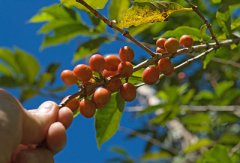
Introduction to Fine Coffee Bean Manor-- Martinique Coffee from Martinique Coffee
Martinique is a small island and the birthplace of coffee in Central America, but it produces very little coffee today. The first coffee tree in the Western Hemisphere was brought from France by Gabriel Mathieu de Clieu in the early 1820s. In his early years, Dirkley was a naval officer in Martinique. He brought back a coffee tree and planted it in Pritchell.
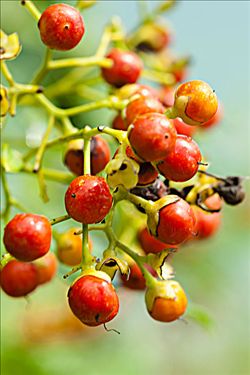
Martinique coffee beans witness the whole process of coffee from survival to extinction
Martinique, the cradle of American coffee Martinique is a small island and the birthplace of Central American coffee, but today it produces very little coffee. The first coffee trees in the Western Hemisphere were brought from France by Gabriel Mathieu de Clieu in the early 1720s. Deckley was an early Martinique naval officer, and he brought home